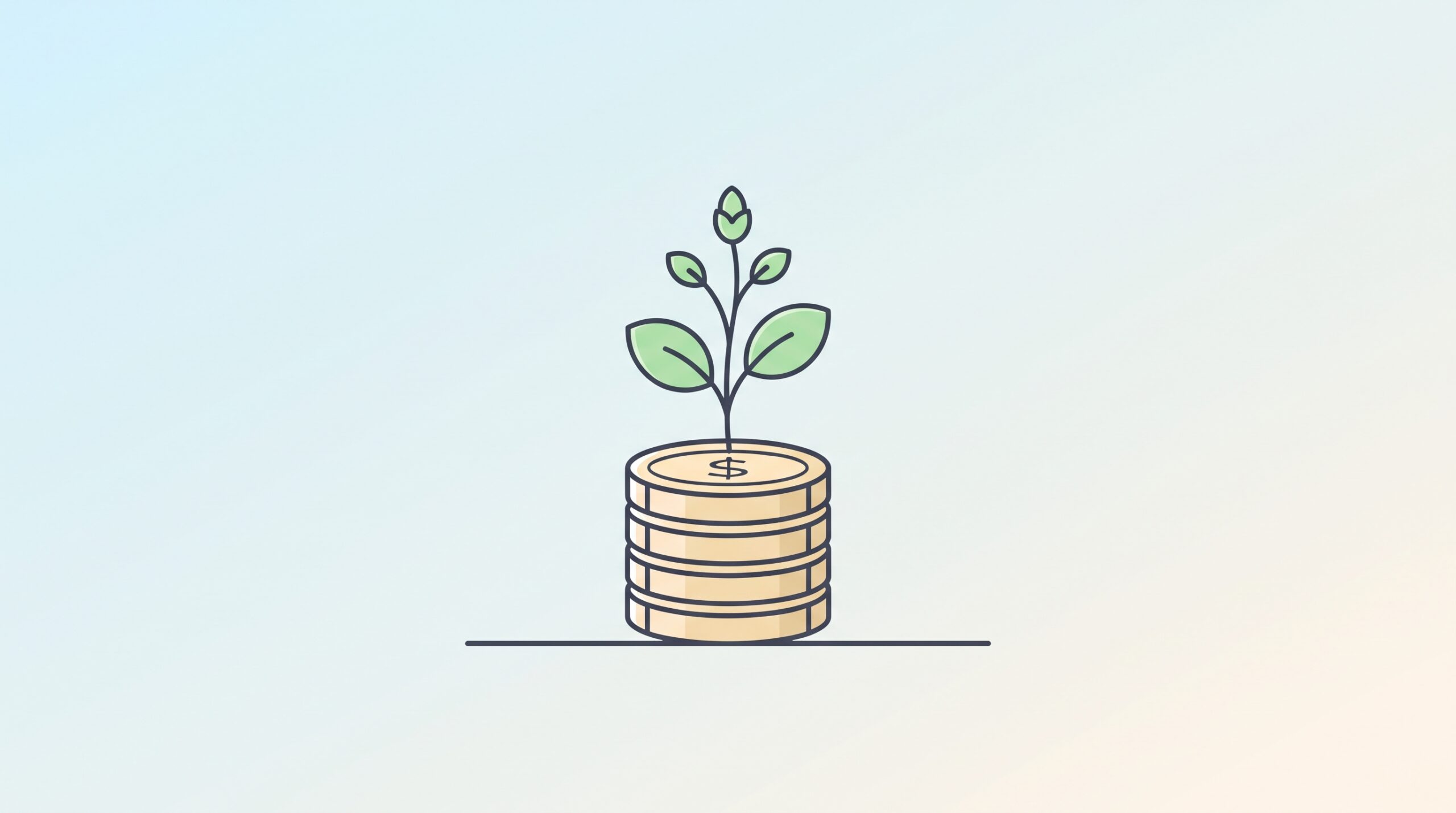
Quick Takeaway: Saving money as a beginner isn’t about willpower or a perfect budget. It’s about a handful of accounts, habits, and automated transfers set up correctly once, so your savings grow in the background whether or not you’re paying attention.
If you’ve ever opened a savings app, stared at the balance, and closed it again without doing anything, you’re not alone. Most people don’t struggle to save because they’re careless with money. They struggle because no one ever laid out, in order, what to actually do first, second, and third.
I’ve worked with plenty of beginners who assumed saving meant cutting out everything enjoyable and living on rice and beans. In my experience, the people who stick with saving long-term are the ones who build a simple system instead, one that runs quietly on autopilot rather than depending on daily discipline.
This guide is meant to be the starting point for that system. It covers what you need before you begin, why saving matters more than it might feel like it does right now, and a clear set of steps to take from your very first dollar saved to a habit that holds up for years. If you want to go deeper on a specific piece afterward, like building your emergency savings or tightening up your monthly budget, you’ll find links to more detailed guides along the way.
In This Post
What You’ll Need
- A clear picture of your monthly income and expenses
- A checking account for everyday spending and at least one separate savings account
- A simple way to automate transfers, either through your bank or your paycheck’s direct deposit settings
- One short-term goal and one longer-term goal, even if both are rough estimates for now
Note: You don’t need a perfect budget before you start saving. A rough estimate of your income and expenses is enough to begin, and you can refine it as you go.
Why Saving Money Matters
Saving money isn’t really about the number in the account. It’s about the options that number gives you. Savings are what let you cover a car repair without a credit card, take a lower-paying job you actually want, or leave a bad living situation without scrambling for cash you don’t have.
Without savings, every unexpected expense becomes a small crisis, and every one of those crises tends to get resolved with debt. The Consumer Financial Protection Bureau has documented how a lack of accessible savings is one of the biggest predictors of high-interest debt for households at every income level, not just low earners.
There’s also a psychological side to this. Watching a savings balance grow, even by $20 a week, tends to build confidence that carries over into other financial decisions. It’s one of the few money habits that pays you back in more than just dollars.
Tip: If saving feels abstract, tie it to something specific, a repair fund, a trip, a cushion between jobs. A concrete reason is much easier to stay motivated for than “saving money” in general.
Step-by-Step Instructions
Step 1: Figure Out Your Starting Point
Before setting any goals, spend one week tracking everything you spend and confirm your actual take-home pay. Most beginners are surprised by at least one category, usually food or subscriptions, once they see it written down instead of estimated from memory.
You don’t need special software for this. Your banking app’s transaction history for the past two or three weeks is usually enough to spot patterns.
Step 2: Set One Short-Term Goal and One Long-Term Goal
A short-term goal might be $500 for a starter emergency cushion. A long-term goal might be three months of expenses, a car down payment, or a vacation fund. Having both keeps you motivated in the near term while still building toward something bigger.
Note: If you’re not sure where to start with the short-term goal, our Emergency Fund Guide walks through exactly how to size and build that first cushion.
Step 3: Open the Right Accounts
Keep your everyday spending in checking and your savings in a separate account, ideally a high-yield savings account at a different bank. This small amount of separation, and friction, makes a noticeable difference in how often that money actually gets spent by accident.
The FDIC Savings Resources page is a good place to confirm any bank you’re considering is federally insured before you open an account.
Step 4: Use a Simple Budgeting Framework
You don’t need a complicated system. The 50/30/20 framework, roughly 50% of income to needs, 30% to wants, and 20% to savings and debt payoff, gives most beginners a workable starting split. If 20% feels out of reach right now, start at 5% or 10% and increase it over time.
A 50/30/20 Budget Calculator can help you translate these percentages into real dollar amounts based on your actual income.
Step 5: Automate Your Savings
Set up an automatic transfer of a fixed amount, even $20, from checking to savings on every payday. Automating the decision removes the daily willpower requirement, which is where most beginner savings plans quietly fall apart.
Tip: Schedule the transfer for the same day your paycheck lands, before you’ve had a chance to spend from that balance.
Step 6: Build Your Emergency Fund Before Other Goals
Once automation is running, direct that money toward a starter emergency fund of $500 to $1,000 first, before vacation funds or other discretionary goals. This fund is what keeps a car repair or medical bill from turning into new debt while you’re still building the rest of your savings habit.
Warning: Skipping the emergency fund to save for something fun first often backfires. One unexpected expense can wipe out months of progress toward a goal that had no cushion behind it.
Step 7: Increase Your Savings Rate Gradually
Every time you get a raise, pay off a debt, or cancel a subscription, redirect a portion of that freed-up money into savings instead of letting it quietly absorb into everyday spending. Increasing your automated transfer by even $10 a month after a raise adds up significantly over a year without ever feeling like a sacrifice.
If you’re looking for specific places to find that extra money, our post on 7 Simple Money Habits That Can Save You $100 a Month covers several practical ways to free up cash without a full budget overhaul.
Common Mistakes to Avoid
- Waiting for a “perfect” budget before starting to save anything at all
- Setting a savings goal so large it feels impossible and giving up within a month
- Keeping savings in the same account used for everyday spending
- Saving for discretionary goals before building even a small emergency cushion
- Treating one bad week of spending as a reason to abandon the habit entirely
Pro Tips
Start smaller than feels meaningful. A $10 automated transfer that actually happens every payday beats a $100 plan you abandon after two weeks.
Name each savings account by its goal, like “Car Repair Fund” or “Trip 2027,” so the purpose stays visible every time you check the balance.
Revisit your savings rate every time your income changes, not just once a year, so raises and side income actually move the needle.
Track progress, not perfection. A month where you saved less than planned still counts, as long as the automated transfer kept running.
Conclusion
Saving money as a beginner doesn’t require a dramatic lifestyle change or a complicated spreadsheet. It requires a separate account, one automated transfer, and a starting goal small enough to actually reach.
Start with Step 1 this week: track your spending for a few days and confirm exactly what’s coming in and going out. Everything else in this guide builds on that starting point, and it’s the step most people skip even though it’s the one that makes every later decision easier.
Once your automated transfer is in place, your emergency savings should be the very next milestone, since it protects every other goal you set after it. From there, the habit mostly runs itself, and your job is just to let it keep running.
If you want a more detailed plan for that first milestone, our Emergency Fund Guide picks up right where this post leaves off.
Helpful resources: Consumer Financial Protection Bureau and FDIC Savings Resources.
2 Responses
[…] a fixed amount feels like too much right now, a structured Beginner Savings Challenge can help you ease into the habit with smaller, increasing […]
[…] you’re building this habit for the first time, a structured Beginner Savings Challenge can help you turn these one-time wins into a consistent savings […]