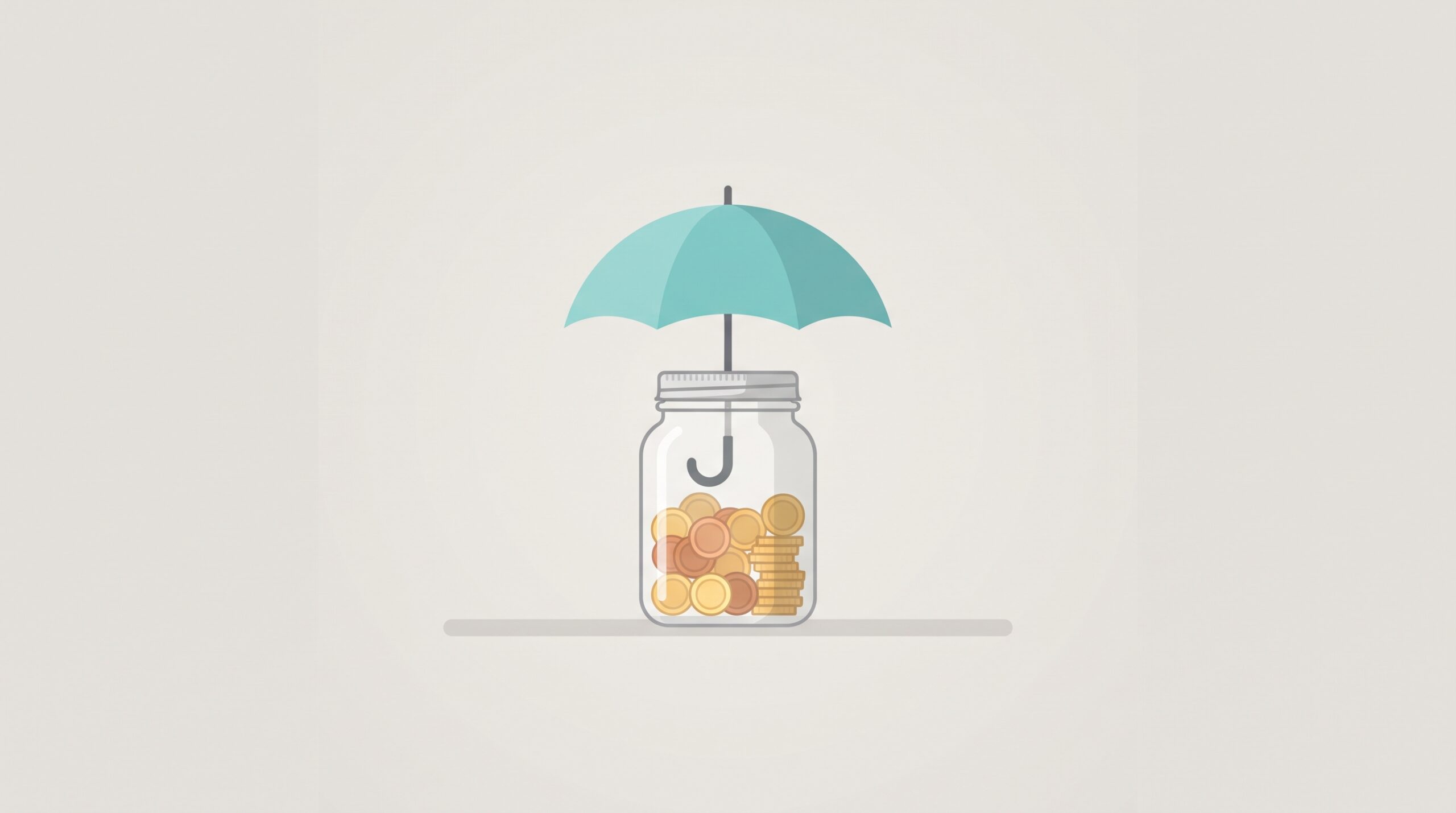
Quick Takeaway: Building an emergency fund doesn’t require a big income or a perfect budget. Start with a small, specific goal, automate a fixed amount every payday, and grow it steadily until you have 3 to 6 months of expenses set aside.
A car repair. A dentist bill you didn’t see coming. A shift at work suddenly getting cut. None of these are rare, and none of them wait for a convenient time. What decides whether they become a stressful scramble or a minor inconvenience is usually one thing: whether you have money set aside for exactly this kind of moment.
In my experience, most people don’t avoid building an emergency fund because they don’t understand it. They avoid it because the idea of saving “3 to 6 months of expenses” feels impossible when they’re already stretched thin. Here’s the good news: you don’t start there. You build toward it, one small and repeatable step at a time.
This guide walks through exactly what you need, why an emergency fund matters more than almost any other savings goal, and a clear set of steps to build one, even if you’re starting from zero.
In This Post
What You’ll Need
- A separate savings account, ideally a high-yield one, that isn’t linked to your everyday debit card
- A starter savings goal, usually $500 to $1,000
- A way to automate transfers on payday, either through your bank or your employer’s direct deposit split
- A rough estimate of your monthly essential expenses, for setting your long-term target
Note: If you don’t already know your monthly essential expenses, a 50/30/20 Budget Calculator can help you estimate that number before you set your final target.
Why an Emergency Fund Matters
An emergency fund is the difference between an unexpected expense being an inconvenience or a financial setback that follows you for years. Without one, a $600 car repair often ends up on a credit card, where it can quietly grow with interest for months.
It’s not just about big emergencies either. Reduced hours at work, a delayed paycheck, or a surprise co-pay can all put pressure on a budget with no cushion. The Consumer Financial Protection Bureau has resources specifically on building savings habits that hold up under this kind of pressure.
An emergency fund also changes how you make decisions. When you have a cushion, you’re less likely to accept the first bad option in a stressful moment, whether that’s a payday loan, a high-interest credit card, or borrowing from family.
Tip: Think of your emergency fund as buying you time and options, not just covering a bill. That mindset makes it easier to prioritize, even when money is tight.
Step-by-Step Instructions
Step 1: Set a Starter Goal of $500 to $1,000
Don’t start with 3 to 6 months of expenses. That number is discouraging when you’re beginning from zero, and it isn’t necessary yet. A starter goal of $500 to $1,000 is enough to cover most small emergencies, a car repair, a broken appliance, an urgent vet bill, without derailing your regular budget.
Step 2: Open a Separate High-Yield Savings Account
Keep your emergency fund in its own account, separate from checking and separate from any other savings goals. A high-yield savings account also means your money earns more while it sits there. The FDIC Savings Resources page is a reliable place to confirm an account is insured before you open one.
Tip: Choose a bank that isn’t the one you check daily on your phone. A small amount of friction to access the account helps prevent the fund from being spent on non-emergencies.
Step 3: Automate a Fixed Amount Each Payday
Set up an automatic transfer of $25 to $50 per paycheck into your emergency fund account. At $50 per paycheck, twice a month, that’s $100 a month, or $1,200 a year, without you having to make the decision to save every single time.
If a fixed amount feels like too much right now, a structured Beginner Savings Challenge can help you ease into the habit with smaller, increasing amounts.
Step 4: Redirect Windfalls and Extra Income
Tax refunds, work bonuses, cash gifts, and rebate checks are some of the fastest ways to grow an emergency fund without changing your monthly budget at all. Sending even half of a $1,000 tax refund straight into your emergency fund can cover a large chunk of your starter goal in one move.
Warning: It’s tempting to spend a windfall entirely, since it feels like “extra” money. Deciding in advance what percentage goes to savings makes it much easier to follow through when the money actually arrives.
Step 5: Grow Toward 3 to 6 Months of Expenses
Once you’ve hit your starter goal, shift toward a bigger target of 3 to 6 months of essential expenses. If your essential monthly costs are around $2,500, that means a long-term goal of $7,500 to $15,000. This is a multi-year goal for most people, and that’s normal. What matters is that the automatic transfers from Step 3 keep running in the background the whole time.
Step 6: Protect the Fund from Everyday Spending
An emergency fund only works if it’s reserved for actual emergencies, not concert tickets, holiday shopping, or a sale you don’t want to miss. Before withdrawing, ask whether the expense is unexpected, necessary, and urgent. If it’s missing any of those three, it’s probably not a true emergency.
Note: If you do need to dip into the fund for a genuine emergency, treat rebuilding it as your next savings priority, ahead of other goals, until it’s back to your target amount.
Common Mistakes to Avoid
- Setting the 3 to 6 month target as your starting goal instead of building up to it gradually
- Keeping the emergency fund in the same account you use for everyday spending
- Using the emergency fund for planned or predictable expenses, like holidays or car registration
- Stopping automated transfers after reaching the starter goal instead of continuing toward the full target
- Investing emergency fund money in stocks or other volatile assets where it could lose value right when you need it
Pro Tips
Name the account something specific, like “Car Repair and Emergencies,” so you’re less tempted to dip into it for non-emergencies.
Round up your automated transfer whenever you get a raise, so your emergency fund grows along with your income.
Check your interest rate once a year using resources like Investor.gov to make sure you’re still earning a competitive yield.
Conclusion
An emergency fund isn’t about reaching a perfect number overnight. It’s about building a habit that quietly protects you from the moments life doesn’t schedule in advance.
Start with the $500 to $1,000 starter goal, automate a fixed amount each payday, and let the habit do the work over time. Consistency matters far more than speed here, and even a small, steady transfer adds up faster than most people expect.
Once your automation is in place, revisit your financial goals every few months to make sure the amount still fits your budget, and adjust it up whenever your income grows.
If you haven’t already set a starter goal, that’s the one action to take today. Open the account, set the transfer, and let the rest build from there.
Helpful resources: Consumer Financial Protection Bureau and FDIC Savings Resources.


7 Responses
[…] to $50 a month, or $600 a year, which is a solid start toward the kind of cushion outlined in our Emergency Fund Guide. If jumping straight into automation feels like a big leap, a structured Beginner Savings Challenge […]
[…] If you’re not sure where to start with the short-term goal, our Emergency Fund Guide walks through exactly how to size and build that first […]
[…] Redirect whatever you save directly into your Emergency Fund Guide plan. Freed-up money that doesn’t have a job tends to quietly disappear back into everyday […]
[…] Once your buffer is in place, our Emergency Fund Guide covers exactly how to grow it toward a full 3 to 6 month cushion when your income […]
[…] your Emergency Fund Guide plan running alongside this decision. Life insurance protects your family long term, while an […]
[…] this decision separate from your Emergency Fund Guide plan. Life insurance protects your family long term, while an emergency fund covers short-term […]
[…] Our Emergency Fund Guide walks through exactly how to size and build this cushion, even on a part-time […]